

RDF Transport, Collection and Alternative Fuel Logistics Across Europe
EMMAR provides professional RDF transport and collection services for companies operating in the waste management, recycling, industrial and energy sectors. We collect ready-to-use Refuse Derived Fuel as well as selected waste streams suitable for further processing into alternative fuel and organise their transport to appropriate recipients and facilities. Our services are aimed at B2B customers, including RDF producers, waste processing facilities, industrial companies, sorting plants, recyclers, waste management companies and cement plants. We organise RDF transport across Europe, including shipments from Poland to other European countries, from European markets to Poland and directly between different EU countries. Depending on the individual project, cooperation may include single shipments as well as regular transport flows involving larger quantities of alternative fuel or suitable waste fractions. Each order is assessed individually according to the material, classification, quantity, loading conditions, destination facility and required delivery schedule. Our experience in waste logistics allows us to combine transport planning with the specific operational requirements associated with RDF and other waste-derived fuels.
RDF, SRF and waste suitable for alternative fuel production
RDF – Refuse Derived Fuel is a fuel produced from selected combustible fractions of waste that undergo appropriate processing, which may include sorting, shredding, separation and preparation to meet the requirements of the intended recovery process.
Depending on the source and processing method, RDF can contain fractions derived from plastics, paper, cardboard, wood, textiles and other combustible components.
Not every waste stream is automatically suitable for RDF production. Its composition, moisture, calorific value, contamination, particle size and other parameters may determine whether a particular material can be accepted by an RDF producer or final recovery facility.
The European market also uses the term SRF – Solid Recovered Fuel. RDF and SRF are closely related concepts, but they should not be treated as completely interchangeable. SRF is subject to defined specifications and classification requirements, while RDF is commonly used as a broader commercial term for refuse-derived fuel.
EMMAR therefore supports logistics involving RDF, SRF and waste suitable for RDF production, with each material assessed according to its actual characteristics and legal classification.
We also collect selected waste streams that can serve as feedstock for alternative fuel production, helping connect waste generators with processors and recovery facilities.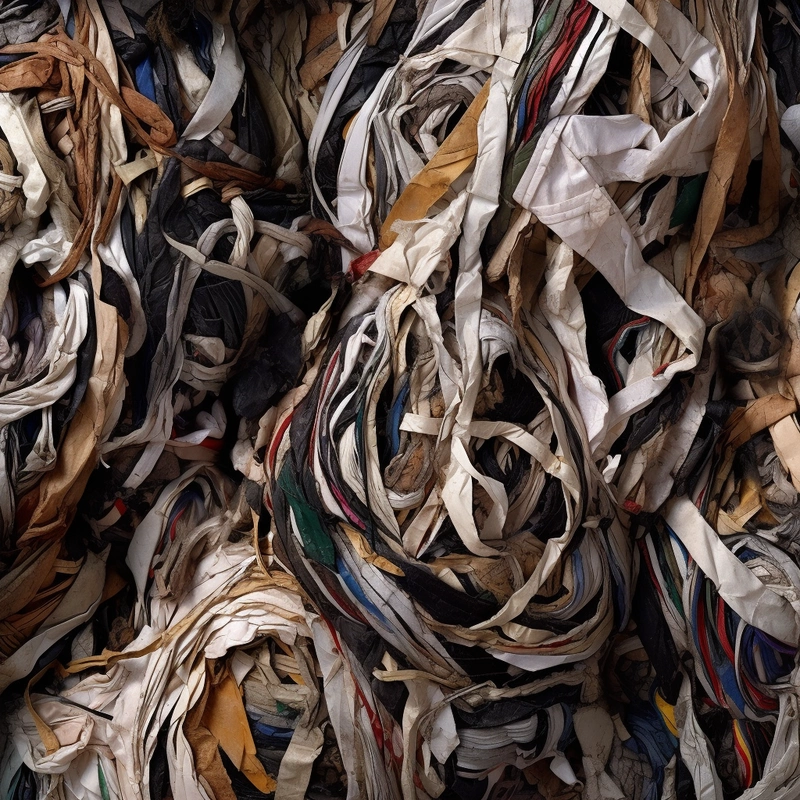
RDF logistics for cement plants, processors and waste management companies
Alternative fuel logistics connects several different parts of the waste and industrial supply chain. Waste may originate at a production facility, sorting plant or waste processing site, undergo preparation by an RDF producer and then be transported to an installation where it can be used for energy recovery or co-processing.
EMMAR supports these flows with RDF logistics for cement plants, waste processors and industrial customers.
Cement production is one of the important industrial applications for RDF and SRF in Europe. Properly prepared alternative fuels can replace part of the conventional fossil fuel input in industrial processes while allowing suitable non-recyclable waste fractions to be recovered.
Our role focuses on the logistics side of this process.
We organise the collection of ready RDF, transport between processing facilities and final recipients, as well as the movement of selected waste suitable for further RDF production.
This can include cooperation with cement plants, RDF producers, sorting facilities, waste management companies, recyclers, energy recovery facilities and industrial plants.
For regular flows, transport can be planned according to production volumes, storage capacity, loading schedules and delivery windows at the receiving installation.
This is particularly important for RDF because large volumes often need to be moved continuously rather than through isolated one-off shipments.
Each recipient may also specify its own acceptance parameters for the material. For this reason, information about the RDF specification, form, quantity and destination should be confirmed before transport is arranged.
EMMAR can coordinate both individual loads and recurring alternative fuel transport between business partners operating in different European countries.Experience and technology
We have the experience, technology and infrastructure needed to ensure the professional collection of waste for RDF.Lower emissions
Thanks to our service, clients make effective use of waste, contributing to the reduction of greenhouse gas emissions and generating an additional source of energy.Comprehensive approach
We take a comprehensive approach with flexibility and high service quality, so our clients achieve their sustainability goals.Walking Floor transport for RDF and high-volume waste
RDF is often a relatively high-volume material, which makes the selection of suitable transport equipment particularly important. One of the key solutions available within the EMMAR fleet is the Walking Floor trailer, also known as a moving-floor trailer. The moving floor system allows cargo to be unloaded horizontally without tipping the complete trailer body. This makes Walking Floor equipment particularly useful for many high-volume bulk materials, recyclable fractions, waste streams and alternative fuels. For RDF logistics, the ability to efficiently load and unload large-volume material can be important for both the waste processing facility and the final recipient. The appropriate trailer always depends on the form in which the material is prepared. Loose RDF may have different transport requirements from baled, compacted or otherwise prepared material. Density, moisture, particle size, loading equipment and the technical conditions at the receiving facility can all affect the choice of transport solution. In addition to Walking Floor transport, EMMAR operates other trailer types, including tipper and curtain-side solutions. Their use depends on the characteristics and preparation of the specific load. Transport planning should therefore start with practical information about the material rather than automatically assigning one trailer type to every RDF shipment. For regular transport programmes, additional factors become important: loading capacity at the producer's site, daily or weekly material volumes, storage capacity and the unloading schedule of the cement plant or other recipient. Careful coordination helps maintain continuity between RDF production and consumption. EMMAR can organise Walking Floor RDF transport across European routes, supporting both individual shipments and regular flows between waste processors, alternative fuel producers and industrial recipients.